
Approach on the Use of Statins in a Sample of Doctors from Argentina. The COFEMA Study
pp 534-540
DOI:
https://doi.org/10.7775/rac.es.v84.i6.8516Keywords:
Hydroxymethylglutaryl, CoA Reductase Inhibitors, Cardiovascular Disease, Behavior, Lipids, EzetimibeAbstract
Background: Available information on the use of statins is very abundant and complex, and in recent years, different recommendations have been published in local and international guidelines. Since the evidence with statins has generated variations in their indication, it is interesting to know the degree of guideline acceptance and the approach of our medical community regarding their use.
Objective: The aim of this study was to identify physician approach on the use of statins in Argentina.
Methods: A 16-item survey was carried out to investigate the degree of agreement with different statin indications and usual dosage.A descriptive analysis was performed and comparisons by specialty and age group were carried out.
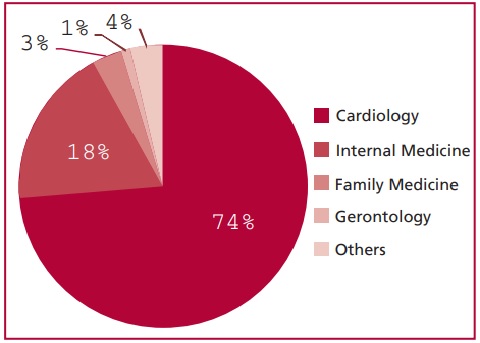
Results: The median age of the 598 respondents was 48 years. Most physicians agreed to indicate high doses of statins in secondary prevention and in diabetic patients. When LDL-C >190 mg/dL was the only risk criterion, 50% of respondents did not approve the indication. In primary prevention, one in three physicians agreed to discontinue treatment after normalizing cholesterol levels. In
two controversial conditions, such as chronic coronary artery disease in patients on dialysis and advanced coronary heart failure,the indication of statins was high. Most respondents monitor adverse effects with hepatograms and CPK measurements in asymptomatic patients.
Conclusions: The survey reflects the opinion of participating physicians on the indication of statins in different scenarios, revealing a partial acceptance of guideline recommendations. Accurate indications, statin doses and the addition of other therapies such as ezetimibe continue to generate different proposals and must be re elaborated and debated in order to optimize them.
Downloads
Published
Issue
Section
License
Copyright (c) 2025 Argentine Journal of Cardiology

This work is licensed under a Creative Commons Attribution-NonCommercial-ShareAlike 4.0 International License.





