
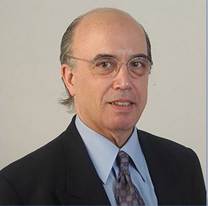
For those of us who shared intimate moments with Hernán at the GESICA Foundation, his departure is an irreplaceable loss that touches us deeply. We went through many challenges and projects together, with some successes and also frustrations, a framework of camaraderie and professional respect that forged a strong friendship over the years.
Thirty-six years have passed since the first meetings in the basement of the Hospital Italiano where we sought to carry out a large-scale national multicenter clinical trial to demonstrate the benefits of the systematic use of amiodarone in patients with chronic heart failure, giving rise to the GESICA (Grupo de Estudio de la Insuficiencia Cardiaca en Argentina) study. From the beginning, Hernán stood out as a great host and then as the natural leader of this project, sharing with us his conviction that it was possible to conduct independent clinical research in our country.
The study was initiated in March 1988 and its results were presented as a late-breaking clinical trial at the American Heart Association Scientific Sessions in November 1993 and were published in the Lancet in 1994. It was the most cited Argentine article in the medical literature until well into the 2000s, and other observations from the study generated several national and international publications. As a result of this research Hernán was invited to give one of the keynote lectures at the American Heart Association Scientific Sessions in 1997.
In 1998, the GESICA Foundation was created to support the management of its own research projects. In the same year, a National Registry of Heart Failure was initiated, involving over 50 centers across the nation and a systematic program of titration with betablockers was implemented. Based on this registry, the DIAL study was carried out, a multicenter clinical trial that showed the efficacy of a telephone intervention performed by trained nurses to improve the outcome of heart failure. Its results were presented as a late-breaking clinical trial at the American Heart Association meeting in 2003 and published in the British Medical Journal in 2005, triggering a new cycle of international presentations and publications.
Without interruption, we continued with a collaborative project with the prestigious GISSI group to carry out the FORWARD study which evaluated the efficacy of Omega-3 to prevent recurrent atrial fibrillation which was presented at the American Heart Association Congress in 2013 and published in the Journal of the American College of Cardiology that same year.
In recent years, the GESICA Foundation, chaired by Hernán Doval, has served as a platform and support for young professionals, enabling numerous clinical research projects to be carried out in the country. In line with his social commitment, Hernán focused on long-cherished project, to train health agents capable of assessing risk factors in poor neighborhoods. Those of us who had the privilege of working with Hernán recognized his extraordinary intelligence, in a personality that overflowed with humility. His encyclopedic knowledge, and his ability to recall and relate scientific information were unique. He used to say that his wisdom was not great, it was just years of accumulated experience and a good memory.
The long hours of work we spent together on research projects were always interspersed with discussions (and sometimes passionate debates) of complex clinical cases, national and international politics, history, literature, art or philosophy. While steadfast in his convictions, he was always open to constructive dialogue and debate of ideas.
Hernán Doval was much more than a doctor; he was a man of principles, of strong values, of an unwavering vocation, and above all a human being deeply committed to the welfare of society. His passion for medicine was not only professional; it was deeply rooted in his ideology, which defined his career and his life. Hernán’s clear medical vocation, together with his strong humanistic values, led him from thought to action in the field of social medicine. His scientific thought, however complex, consistently, always concluded with a humanitarian and social perspective. Hernán was not only a reference in medicine; he was also a teacher in the deepest sense of the word. His lessons were not only about cardiology, but also about the art of being a physician, ethics, responsibility and commitment to others; he trained countless generations of physicians and students who saw him as an example to follow. The fact that, although he was one of the most outstanding cardiologists of his generation, he never received a formal diploma is a paradox that underscores his authenticity.
Not only his colleagues and students recognized his career. He was named Distinguished Citizen of the city of Buenos Aires, as a tribute to his professional and human legacy. A man who dedicated his life to the well-being of others, who made social medicine and cardiology a passion he shared with everyone around him.
In an age of overwhelming technology, Hernán never succumbed to the dictatorship of the cell phone or the Google resource. Although we knew he was always at the hospital, it was not easy to find him. He was given the well-deserved nickname “Professor Herman” when we arrived at the Berlin airport and found a person waiting for him with a sign bearing that inscription. Today, his departure leaves a deep void, but his legacy remains intact, and his influence will continue to guide new generations of doctors, scientists and people committed to a better world.
Dear “Professor Herman”, as we affectionately called you, your spirit, your vision and your love for science and social medicine will live on in those of us who knew and appreciated you.
 , Daniel NulMTSAC,
 Sergio VariniMTSAC
GESICA Foundation