
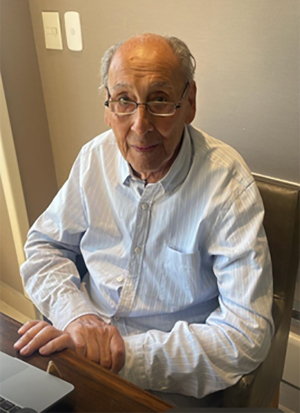
Writing a few lines in memory of Dr. José Antonio “Cacho” Navia inevitably means recalling a fundamental part of the Argentine cardiac surgery history.
After graduating as a physician and earning his Doctor of Medicine degree from the Faculty of Medical Sciences at the National University of La Plata, he returned to his beloved city of Mar del Plata to pursue his professional career in general and thoracic surgery at Hospital Marítimo. From his earliest years, he demonstrated a solid clinical background, the result of his beloved mentor’s influence, Dr. Manzino, of Hospital de Clínicas, who played a decisive role in shaping his deep empathy and commitment to patient care.
In 1970, fascinated by the groundbreaking news about coronary bypass surgery coming from the Cleveland Clinic, he decided to apply to train in cardiac surgery there. He was accepted into one of the world’s most prestigious institutions at a historical moment in the development of this technique. After two years of intense work and learning, he returned to Argentina with an excellent education and joined Dr. René Favaloro’s team, playing an active role in establishing coronary revascularization surgery in Argentina and in training a new generation of cardiovascular surgeons.
In 1990, he became head of the Cardiovascular Surgery Department at Hospital Italiano of Buenos Aires. This phase represented one of the most notable periods of his professional career, as he led one of the most important cardiac surgery programs in Argentina and Latin America.
His leadership left a profound mark on the specialty. Among his major achievements were the creation of the country’s first aortic valve homograft bank, which allowed optimizing the treatment of young patients with infectious endocarditis; the strengthening and expansion of the heart transplant program, which culminated in the first heartlung transplant performed in Argentina; and the creation of an advanced mechanical circulatory support program, which enabled to treat patients using stateoftheart technology available worldwide.
He was a tireless traveler, driven by a constant intellectual and scientific curiosity. He went around the world in search of knowledge, innovations, and advances that could be applied to benefit patients in our country. His active participation in the international cardiology community helped establish and enhance the prestige of Argentine cardiac surgery globally.
He acted as president of the Argentine Society of Cardiology in 1987 and of the Argentine College of Cardiac Surgeons in 1989, always distinguishing himself through his energy, work capacity, and commitment to teaching, research, and the training of new generations of specialists.
Research and technological development were among his other great passions. He participated in the design and development of left ventricular assist devices for patients with endstage heart failure, as well as cannulae, specialized catheters, and stentfree biologi enthusiastically until his last days, was an innovative device designed to reduce the risk of stroke during endovascular procedures.
In 2002, he was elected Full Member of the National Academy of Medicine, an institution he later presided over. He was also a member of numerous international scientific societies and served as Visiting Professor and Researcher at prestigious universities, including Purdue University (Indiana, United States), the University of California, Irvine (United States), and Juntendo University (Tokyo, Japan).
It is difficult to summarize in a few lines the magnitude of the scientific and personal legacy of professionals like him, who honor our country with a life dedicated to knowledge, innovation, and service.
I had the immense good fortune to know him closely from a very young age. I admired him, looked up to him as a role model, and found in him a paradigm of professional and human excellence. Reflecting today on his countless achievements evokes a mixture of sadness at his passing and deep admiration for the magnitude of his legacy.
He was my mentor and also my brother José´s. We both tried to follow the path he laid out, inspired by his values, his dedication, and his passion for medicine. I used to tell him, jokingly, that he was “too smart to be a cardiac surgeon”; he would respond with a smile. He was constantly spearheading projects, promoting change, and seeking to develop cuttingedge technologies in a context that often seemed unfriendly to innovation.
He was a wise, observant, generous man who was deeply empathetic toward his patients. Recently, several of his colleagues summed him up with a phrase as simple as it was powerful: “what a great surgeon and what a great person.” There is probably no better way to describe someone of his standing.
Dear “Cacho” Navia: Men of your stature are not bid farewell; they are remembered and honored. You will live on in the memories of your surgeon nephews, of those who had the privilege of knowing you, in the generations of professionals you trained, and in each of the projects you led with vision and enthusiasm.
Your contribution to Argentine cardiac surgery was immense and enduring. Your legacy will continue to inspire those who follow the path you helped build.
Rest in peace, dear “Cachito”.
Dr. Daniel Navia