

INTRODUCTION
Elevated concentrations of lipoproteins with atherogenic potential are consistently associated with both the initial onset and recurrence of cardiovascular events. (1) The available, robust, and reproducible clinical and genetic evidence has conclusively established low-density lipoprotein cholesterol (LDL-C) as a causal factor in the development of atherosclerotic cardiovascular disease. (2)
According to current clinical practice guidelines, the initial management of dyslipidemia in patients at high cardiovascular risk is based on the use of statins at the maximum tolerated dose. (3-5) When, despite this intervention, LDL-C levels do not reach therapeutic targets—particularly in patients with established atherosclerotic cardiovascular disease or severe forms of hypercholesterolemia—it is recommended to intensify treatment by adding other lipid-lowering agents, including ezetimibe, proprotein convertase subtilisin/kexin type 9 (PCSK9) inhibitors, and bempedoic acid.
Pharmacological inhibition of PCSK9 has established itself as an effective strategy for achieving substantial reductions in LDL-C and lowering cardiovascular risk. Subcutaneous administration of monoclonal antibodies, such as evolocumab and alirocumab, on a biweekly or monthly , has demonstrated reductions of nearly 60% in LDL-C levels, along with a significant decrease in cardiovascular events in high-risk patients on statin therapy. (6, 7) Similarly, the small interfering RNA, inclisiran, enables sustained reductions in LDL-C of approximately 50% through a regimen that includes an initial dose, a second administration at 3 months, and subsequent maintenance doses every 6 months. (8, 9) Furthermore, safety assessments of these drugs (monoclonal antibodies and inclisiran) have not identified any significant signals of concern. The most common adverse events were injection-site reactions, the vast majority of which were mild in intensity and did not require any intervention.
Although both therapeutic strategies have proven capable of enabling the majority of patients with high or very high cardiovascular risk to achieve the recommended LDL-C targets, their widespread implementation is limited by their high cost and the need for subcutaneous administration. In this context, the development of small, orally administered PCSK9 inhibitors could represent a more accessible and practical alternative for the treatment of hypercholesterolemia. (10) Although information on the price of these drugs once they are marketed is not yet available, the introduction of new therapeutic alternatives could foster greater competition in the market and, thereby, help reduce the costs of currently available treatments, regardless of their final price.
In recent years, new data have emerged providing evidence on the lipid-lowering efficacy and safety profile of these emerging agents. (11-20) Previously, our research group published a systematic review on this topic. (21) However, given the emergence of new evidence over the past year, the objective of the present study was to provide an update through a systematic review and meta-analysis of the available evidence on the efficacy and safety of oral PCSK9 inhibitors.
MATERIALS AND METHODS
Search and Data Extraction Strategy
This systematic review was conducted in accordance with the recommendations of the PRISMA (Preferred Reporting Items for Systematic Reviews and Meta-Analyses) statement (22) and was registered with PROSPERO. A comprehensive literature search was conducted to identify studies evaluating oral PCSK9 inhibitors published through April 20, 2026. Two independent reviewers searched various databases, including PubMed/MEDLINE, Scielo, Latindex, and the Cochrane Library, using both MeSH terms and relevant keywords, including “oral PCSK9 inhibitors,” “AZD0780,” “Laroprovstat,” “MK-0616,” “Enlicitide,” “CVI-LM001,” “NNC0385-0434,” and “DC371739.” In PubMed, Boolean operators were applied as follows: (“PCSK9 Inhibitors”[MeSH Terms] OR “PCSK9 inhibitor”[tiab]) AND (oral[tiab] OR orally[tiab]). In the SciELO and Latindex databases, free-text searches were conducted using terms in English and their Spanish equivalents, such as “PCSK9 inhibitors” and “inhibidores de PCSK9,” combined with the term “oral.” Subsequently, a manual review of titles and abstracts was conducted to identify relevant clinical studies. In the Cochrane Library, the search was conducted in the CENTRAL database (Cochrane Central Register of Controlled Trials), using terms such as “PCSK9 inhibitors” and “oral,” with the aim of identifying randomized clinical trials.
Grey literature was also explored, including records on ClinicalTrials.gov, conference presentations, and material available on pharmaceutical company websites. Additionally, the reference tracking (snowballing) technique was used to identify additional publications. There were no language restrictions.
Inclusion and exclusion criteria
Clinical trials in humans were considered eligible, specifically randomized studies evaluating the lipid-lowering efficacy and safety of oral PCSK9 inhibitors compared with placebo or other lipid-lowering drugs. Opinion pieces, narrative or systematic reviews, and observational studies were excluded.
Outcome variables
Percentage changes in lipid parameters and the incidence of clinically relevant adverse events were analyzed. The lipid markers evaluated included LDL-C, non-HDL cholesterol, apolipoprotein B (ApoB), triglycerides, and lipoprotein(a) [Lp(a)]. Safety was assessed by analyzing all reported adverse events. Additionally, serious adverse events were considered, defined as those resulting in death, being life-threatening, requiring hospitalization or prolonging hospitalization, causing significant disability, or being considered clinically relevant by the investigator.
Quality Assessment
The risk of bias was analyzed using the Cochrane Collaboration tool designed for this purpose. (23) The RoB-2 tool assesses five domains: randomization process, deviations from the planned intervention, incomplete data, outcome measurement, and selection of reported outcomes. Each domain was classified as “low risk,” “high risk,” or “some concerns,” and an overall rating was assigned to each study.
Statistical Analysis
Initially, a qualitative synthesis was performed of the studies that met the inclusion criteria. Subsequently, a meta-analysis was conducted on those studies that reported sufficient data for quantitative pooling. Regarding the doses included, for NNC0385-0434 and laroprovstat (AZD0780), the maximum reported doses were considered, since the optimal dose in advanced stages has not yet been defined and both drugs demonstrated acceptable safety profiles. In the case of enlicitide (MK-0616), the 18-mg dose was selected from the study by Ballantyne et al., (11) due to its similarity to the dose used in subsequent studies (20 mg; CorReef program), and the 20-mg dose was selected from the study by Johns et al. (17) For each study, the percentage changes in lipid parameters and the frequency of relevant adverse events were calculated. The results were expressed as the mean difference (MD) or relative risk (RR), with their respective 95% confidence intervals (95% CI). When data were not reported as mean and standard deviation, conversion methods previously described in the literature were used. (24) Heterogeneity among studies was assessed using the I² statistic. Fixed-effect or random-effects models were used depending on the degree of heterogeneity observed. The Z-test was used to compare effects between subgroups. A p-value < 0.05 (two-sided) was considered statistically significant. The analysis was performed using the statistical software R (version 3.5.1). (25)
Sensitivity Analysis
The sensitivity analysis was restricted to those lipid markers for which five or more studies were available, since, in contexts with a small number of studies, the exclusion of a single study could disproportionately alter the pooled estimates and compromise the robustness of the results.
Publication bias
No formal assessment of publication bias was conducted due to the small number of included studies, which limits the validity of tools such as funnel plots or specific statistical tests, the use of which is recommended only when a sufficient number of studies are available.
RESULTS
The search strategy identified a total of 239 records. After removing 211 duplicates and irrelevant studies, 28 full-text articles were evaluated, of which 18 were excluded for failing to report the exposure or outcomes of interest. The study selection process is presented in Figure 1.

The qualitative analysis included two abstracts (13, 16) and eight full-text articles (11, 12, 14, 15, 17-20). Of these, six studies provided sufficient information on lipid parameters to be included in the quantitative synthesis (meta-analysis) (11-13, 17-19). Table 1 summarizes the main characteristics of the studies considered in this systematic review.
Table 1
Characteristics of the studies included in the systematic review
| Study (year) | Intervention | n | Population | Follow-up (weeks) |
|---|---|---|---|---|
| Liu et al. (2020) (11) | CVI-LM001, 200 or 300 mg/day versus placebo. | 32 | Chinese subjects aged 18 to 65 years with mild hypercholesterolemia (LDL-C ≥ 3.2 mmol/L and ≤ 4.88 mmol/L). | 4 |
| Wang et al. (2022) (12) | DC371739, 40 mg/day versus placebo. | 20 | Chinese subjects with hypercholesterolemia. | 4 |
| Johns et al. (2023) (13) | Enlicitide, 10 or 20* mg/day versus placebo. | 40 | Patients on statin therapy. Mean age was 57.7 years, and 67.5% were men. | 2 |
| Ballantyne et al. (2023) (14) | Enlicitide, 18 mg/day* versus placebo. | 152# | Participants aged ≥18 and ≤80 years who had to fall into one of the following categories: 1) clinical atherosclerotic cardiovascular disease with LDL-C ≥70 and ≤160 mg/dL; 2) intermedia- te or high risk with LDL-C ≥100 and ≤200 mg/ dL; or 3) borderline risk with LDL-C ≥130 and ≤250 mg/dL. Participants were also on stable lipid-lowering therapy. Mean age was 62 years, and 51% were men. | 8 |
| Koren et al. (2024) (15) | NNC0385-0434, 100 mg/day* versus placebo. | 107# | Individuals with established atherosclerotic car- diovascular disease (≥40 years) or at high risk of developing it (>50 years), with LDL-C levels of at least 70 mg/dL and receiving statins at the maxi- mum tolerated dose and stable lipid-lowering therapy. Mean age was 64.3 years, and 69% were men | 12 |
| Vega et al. (2024) (16) | Laroprovstat, 30 mg/day* ver- sus placebo. | 35 | Subjects with hypercholesterolemia (LDL-C ≥100 mg/dL and ≤190 mg/dL) treated with 20 mg of rosuvastatin. | 4 |
| PURSUIT trial. (2025) (17) | Laroprovstat, 30 mg/day* ver- sus placebo. | 172# | Patients with LDL-C levels ≥70 mg/dL and <190 mg/dL, and triglycerides <400 mg/dL, on stable doses of moderate- or high-intensity statins, with or without ezetimibe at the start of the study. Mean age was 62.4 years, and 52.1% were men. | 12 |
| Ballantyne et al. (2026) (18) | Enlicitide 20 mg/day versus pla- cebo. | 303 | Participants aged 18 years or older with hete- rozygous familial hypercholesterolemia, recei- ving lipid-lowering therapy (at least moderate- or high-intensity statins), and who had an LDL-C levels ≥55 mg/dL with a history of atherosclero- tic cardiovascular disease, or an LDL-C level ≥70 mg/dL without a history of atherosclerotic car- diovascular disease. Mean age was 52.4 years, and 49% were men. | 52 |
| Navar et al. (2026) (19) | Enlicitide 20 mg/day versus pla- cebo. | 2,909 | Adults with a history of atherosclerotic cardio- vascular disease and LDL-C levels ≥55 mg/dL, as well as those with intermediate/high cardio- vascular risk and LDL-C levels ≥70 mg/dL. Mean age was 62.8 years, and 60.7% were men. | 52 |
| Catapano et al. (2026) (20) | Enlicitide 20 mg/day versus eze- timibe 10 mg/day, bempedoic acid 180 mg/day, or the com- bination of bempedoic acid and ezetimibe at those doses. | 301 | Adults with a history of atherosclerotic cardio- vascular disease and LDL-C levels ≥55 mg/dL, as well as those with intermediate/high cardio- vascular risk and LDL-C levels ≥70 mg/dL. Mean age was 64.5 years, and 63% were men. | 8 |
*This dose was selected for inclusion in the quantitative lipid analysis.
# Sum of participants in the selected active arm and the placebo arm.
The quality of the evaluated studies is shown in Figure 2. It should be noted that studies available only as abstracts were not evaluated, due to the limited information, which prevents an adequate assessment of the risk of bias. Overall, three studies were classified as having a low risk of bias, while five raised some concerns. These concerns were primarily related to biases arising from deviations from the planned intervention, the absence of complete data on outcomes, and the selection of reported results.

Regarding the assessment of lipid-lowering efficacy, four of the studies included in the qualitative synthesis could not be incorporated into the quantitative analysis.
One of these was a Phase 1 trial designed to evaluate the safety, tolerability, and pharmacokinetic and pharmacodynamic profiles of laroprovstat, administered both as monotherapy and in combination with standard treatment (rosuvastatin). (14) In a subgroup of 35 participants with hypercholesterolemia (LDL-C between 100 and 190 mg/dL), rosuvastatin 20 mg daily was administered for 3 weeks, followed by administration of laroprovstat 30 mg or placebo for an additional period. Following this initial phase with rosuvastatin, laroprovstat 30 mg achieved a 52% reduction in LDL-C (95% CI: -57% to -45%). This study was not included in the meta-analysis because the number of patients assigned to each group was not clearly specified, nor were the percentage changes in lipid levels in the placebo group reported.
The second study was a small, placebo-controlled Phase 1b clinical trial. (16) In this study, administration of CVI-LM001 at a dose of 300 mg reduced LDL-C and ApoB levels by 26.3% and 17.4%, respectively, compared with baseline values in subjects with hypercholesterolemia. However, it was not possible to include this study in the quantitative analysis due to the absence of measures of dispersion and the lack of detailed data from the placebo group.
A third study evaluated DC371739 in the context of a Phase I clinical trial. (15) In this study, LDL-C showed a significant decrease of 19.1% compared with placebo, while triglycerides and ApoB were reduced by 27.1% and 25.3%, respectively. Once again, the available information proved insufficient for quantitative analysis, which prevented its inclusion in the meta-analysis.
Finally, a fourth study was not included in the meta-analysis. (20) Unlike the previous studies, its exclusion was not due to incomplete data but rather to its specific methodological nature, as it is the only study identified that compares an oral PCSK9 inhibitor with other lipid-lowering strategies, which limited its comparability with the rest of the included evidence. This was a phase 3, randomized, double-blind, active-controlled trial that included adults on statin therapy with a history of atherosclerotic cardiovascular disease or high cardiovascular risk and elevated LDL-C levels. Participants were randomized to receive enlicitide, bempedoic acid, ezetimibe, or a combination of the latter two for 56 days. The e nlicitide achieved a 64.6% reduction in LDL-C (95% CI: -68.3% to -60.9%), which was significantly greater than that observed with bempedoic acid (-6.3%; 95% CI : -13.5% to 0.8%), ezetimibe (-27.8%; 95% CI: -32.3% to -23.4%) or their combination (36.5%; 95% CI: -40.8% to -32.2%), with consistent results also observed for , ApoB, and non-HDL cholesterol (all p < 0.001). The incidence of adverse events was similar across the groups.
The remaining studies (n = 6) could be quantitatively assessed. In this case, our study showed that oral PCSK9 inhibitors significantly reduced LDL-C levels compared with placebo (MD −57.83%; 95% CI: −60.48% to −55.18%; I² = 23 .0%), as well as ApoB levels (MD −49.02%; 95% CI: −53.61% to −44.42%; I² = 76.3%) (Figure 3). Similarly, treatment with these drugs was associated with significant reductions in non-HDL cholesterol (DM −53.48%; 95% CI: −57.61% to −49.36%; I² = 56.5%), triglycerides (DM −15.44%; 95% CI: −15.96% to −14.92%; I² = 0 .0%), and Lp(a) (MD −24.86%; 95% CI: −29.50% to −20.21%; I² = 99.2%) compared with placebo. (Figure 4)
Fig. 3
Percentage reduction in LDL-C and apolipoprotein B levels with oral PCSK9 inhibitors. Fixed- and random-effects models, mean difference (MD), 95% confidence intervals (CI), and I2 statistic.

Fig. 4
Percentage reduction in non-HDL cholesterol, triglyceride, and lipoprotein(a) levels with oral PCSK9 inhibitors. Fixed- and random-effects models, mean difference (MD), 95% confidence intervals (CI), and I2 statistic.

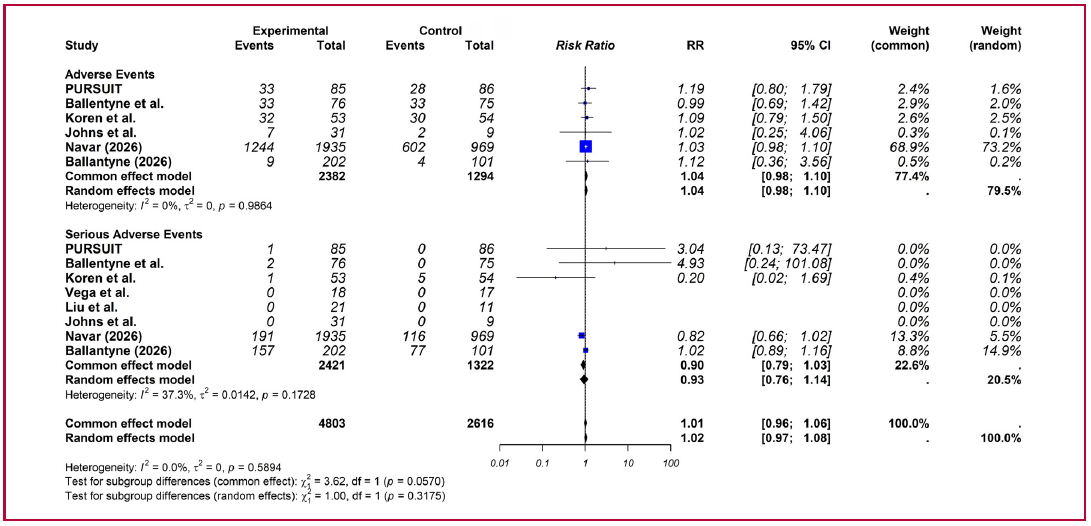
Regarding safety, of the nine studies comparing an oral PCSK9 inhibitor with placebo, six reported total adverse events and eight reported serious adverse events, allowing for a combined quantitative analysis. Our findings showed no significant differences in the outcomes assessed between oral PCSK9 inhibitors and placebo. (Figure 5)
Fig. 5
Safety analysis. Fixed-effect and random-effects models, relative risk (RR), 95% confidence intervals (CI), and I2 statistic.
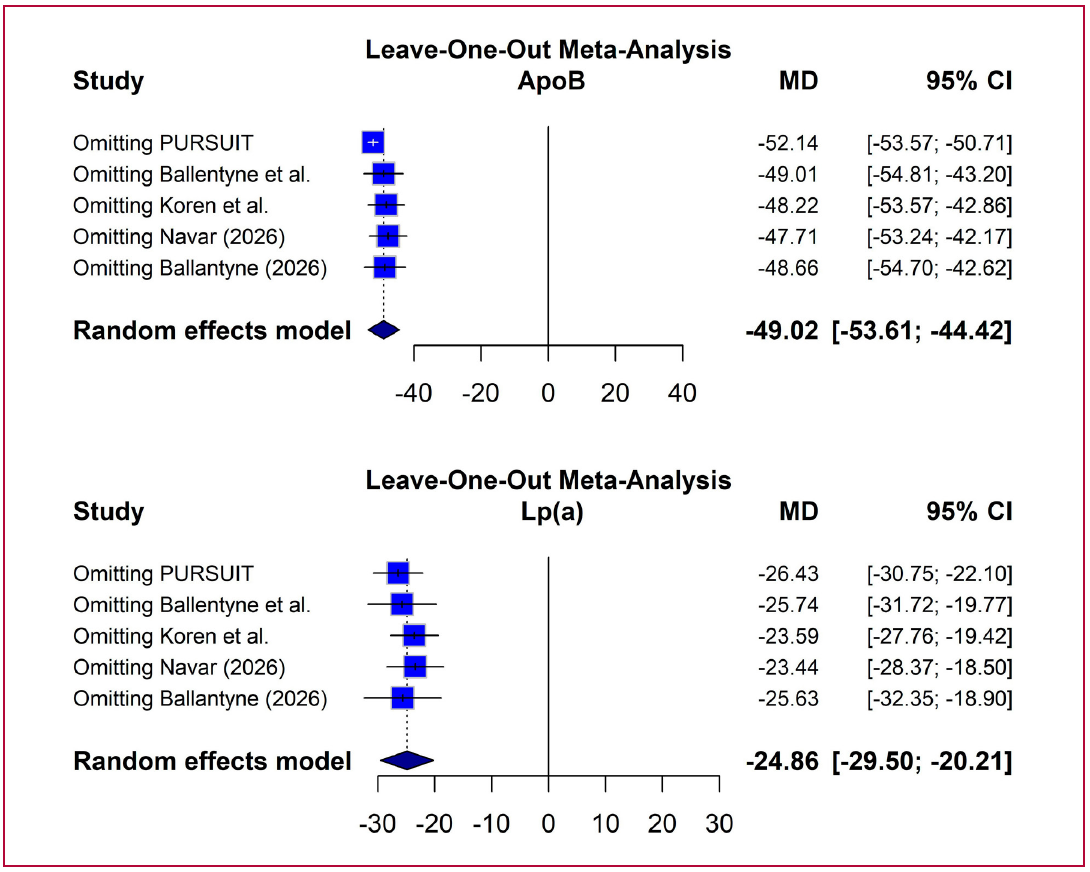
Sensitivity analysis confirmed the robustness of the findings regarding reductions in LDL-C, ApoB, and Lp(a). (Figures 6 and 7)
Fig. 6. Sensitivity analysis of studies evaluating the percentage reduction in LDL-C.
Fig. 7
Sensitivity analysis of studies that evaluated the percentage reduction in apolipoprotein B (ApoB) and lipoprotein(a) [Lp(a)].

DISCUSSION
In this systematic review and meta-analysis, treatment with oral PCSK9 inhibitors was associated with significant reductions in lipid levels, with no observed differences in the incidence of adverse events compared with placebo.
The binding of PCSK9 to the low-density lipoprotein receptor (LDLR) directs this receptor toward lysosomal degradation, preventing its recycling to the hepatocyte surface and thereby decreasing the clearance of C- r circulating LDL. (26) Consequently, PCSK9 inhibition increases the availability of functional LDLRs on the cell membrane, resulting in greater removal of C-LDL from the plasma.
To date, various lipid-lowering therapeutic strategies aimed at inhibiting PCSK9 have been developed and approved. (27) All of them are administered subcutaneously and act through two main mechanisms: inhibition of PCSK9’s functional activity in the extracellular space via monoclonal antibodies (alirocumab and evolocumab), or reduction of its hepatic synthesis at the intracellular level via a small double-stranded interfering RNA (inclisiran). Recently, an additional agent with an innovative mechanism of action has been approved. (28) This is lerodalcibep, a recombinant protein engineered by fusing human serum albumin with a PCSK9-specific adnectin-like binding domain. This molecule has been shown to reduce LDL-C levels by 50% in patients with heterozygous familial hypercholesterolemia, as well as in individuals with cardiovascular disease or at high cardiovascular risk. (29, 30) Furthermore, a fifth drug has been evaluated in two clinical trials conducted in China, which have shown that recaticimab—a humanized monoclonal antibody with a prolonged half-life and less frequent dosing—reduces C-LDL levels by approximately 50% as monotherapy and by up to 62% when added to statin therapy. (31, 32)
Subcutaneous administration can be uncomfortable and poorly tolerated by many patients. Furthermore, current PCSK9-targeted therapies are considerably more expensive than other available options, particularly oral lipid-lowering agents, which constitutes a significant barrier to access to these treatments. (33) In this context, there has been growing interest in the development of oral PCSK9 inhibitors for reducing LDL-C. (10)
Our study evaluated the currently available evidence on five oral PCSK9 inhibitors. Three agents ( enlicitide, laroprovstat, and NNC0385-0434) were included in the quantitative analysis, showing significant reductions in C-LDL and ApoB levels, consistent with those reported for injectable PCSK9 inhibitors. (34, 35) A ≥50% reduction in C-LDL levels constitutes a clinically relevant outcome, as it represents a target strongly recommended by current guidelines, particularly in patients with high or very high cardiovascular risk. (3-5) Furthermore, the observed reduction in ApoB levels is also of great clinical importance, as this marker more accurately reflects the total number of atherogenic particles and has been proposed as an additional lipid target in high-risk patients who have already achieved the LDL-C target. (4, 36) While the development and research of enlicitide and laroprovstat continue to advance, it is important to note that, at the end of 2022, the development of NNC0385-0434 was discontinued for strategic reasons on the part of the sponsor. (37) In contrast, the reduction in LDL-C with the other two agents (DC371739 and CVI-LM001) was more modest, ranging from approximately 19% to 26%.
The variability observed among the different drugs could be attributed, at least in part, to differences in their underlying mechanisms of action. Oral PCSK9 inhibitors comprise structurally diverse molecules that act at different levels of the PCSK9–LDLR axis. (10) Transcriptional inhibitors, such as DC371739 and CVI-LM001, reduce PCSK9 expression by interfering with transcription mediated by hepatocyte nuclear factor 1α and by stabilizing LDLR mRNA (38, 39); Additionally, CVI-LM001 activates hepatic AMPK, which reduces triglyceride synthesis and promotes fatty acid oxidation. In contrast, laroprovstat binds directly to PCSK9, while macrocyclic peptides such as enlicitide and NNC0385-0434 mimic the EGF-A domain of the LDLR or bind to the catalytic site of PCSK9, thereby blocking the interaction between PCSK9 and the LDLR. (40)
Another important finding of our meta-analysis is that oral PCSK9 inhibitors can significantly reduce Lp(a) levels by approximately 25%. This effect is consistent with what has been previously reported for other PCSK9 inhibition strategies, such as monoclonal antibodies (29%) and inclisiran (22%). (41) However, although some preliminary data suggest that the cardiovascular benefit associated with PCSK9 inhibition may be more pronounced in patients with elevated baseline Lp(a) levels, the clinical impact of this reduction on Lp(a) has not yet been fully defined. (42)
The CORALreef AddOn study demonstrated that the PCSK9 inhibitor enlicitide achieved significantly greater reductions in LDL-C compared with standard non-statin oral therapies (bempedoic acid, ezetimibe, and their combination) in patients on statins. (20) Although this study was not included in the quantitative analysis due to the absence of a placebo group, analysis of the arm treated with the oral PCSK9 inhibitor showed, at 8 weeks, a mean reduction in C-LDL of 64.6%. This magnitude is comparable to that previously observed in studies with injectable monoclonal antibodies and is consistent with the overall findings of this meta-analysis. Consistent findings are evident when analyzing other atherogenic markers, such as ApoB, non-HDL cholesterol, and Lp(a).
Finally, this meta-analysis did not reveal any significant safety concerns. Oral administration of these drugs eliminates the injection-site reactions typical of the subcutaneous route used by their predecessors, which constitutes a potential clinical advantage. However, the short follow-up period in many of the included studies limits the ability to fully assess long-term safety. In fact, randomized clinical trials are not the most appropriate design for detecting and evaluating rare, late-onset, and/or unexpected adverse effects related to drug safety. (43) Furthermore, the highly homogeneous populations resulting from restrictive inclusion criteria mean that these studies are not suitable for comprehensively describing the safety profile of the medications.
In the context of increasingly stringent lipid-lowering targets that are often not achieved in clinical practice (44-45), the development of new lipid-lowering therapies represents a significant advance. Future large-scale studies will be necessary to confirm their efficacy and safety, as well as to assess the cardiovascular impact of these new drugs. (46)
This meta-analysis has several limitations. First, clinical heterogeneity was observed among the studies, stemming from differences in the characteristics of the included populations, and in some cases, considerable statistical heterogeneity was also evident. Second, the lack of detailed information in some original studies limited a comprehensive assessment of their methodological quality. Third, the small number of included studies reduces the power of formal tests to detect publication bias and limits the ability to perform sensitivity analyses, which in this study were restricted to LDL-C, ApoB, and Lp(a). Finally, for some of the agents evaluated, the optimal dose has not yet been definitively established in more advanced-phase clinical trials.
CONCLUSION
According to the evidence synthesized in this systematic review, oral PCSK9 inhibitors may offer lipid-lowering efficacy comparable to that observed with other subcutaneously administered PCSK9 inhibition strategies. Furthermore, a randomized clinical trial demonstrated that, in patients treated with statins, these drugs are more effective than other alternatives such as ezetimibe or bempedoic acid for reducing LDL- . In terms of safety, no relevant signals were identified. However, it is important to note that the evidence available to date remains limited and preliminary, based on a small number of studies. In this context, the clinical trials currently underway will be key to providing more robust and definitive information.
DECLARATIONS
Authorship
All authors listed meet the authorship criteria established by the International Committee of Medical Journal Editors (ICMJE) for this article, assume responsibility for the integrity of the work as a whole, and have approved the final version for publication.
Author Contributions
WM and ML participated in the conception and design of the study. WM, LB, and GG contributed to data collection. The interpretation of the results and statistical analysis were performed by WM and ML. WM, ML, JPN, and GG drafted the manuscript. All authors critically reviewed the final draft.
Use of Artificial Intelligence
During the preparation of the manuscript, an artificial intelligence tool (ChatGPT, OpenAI) was used exclusively to improve aspects of style and writing. The tool did not intervene in the generation of scientific content, data analysis, or the interpretation of results. The authors assume full responsibility for the final content of the article.
Financiamiento
None.
Conflict of interest
The authors declare that they have no conflicts of interest related to the drugs analyzed in this study.
Ethical Approval
This work is based on previously published studies and does not include research conducted by the authors on humans or animals.