

A 10-year-old asymptomatic female patient with a history of anomalous origin of the left main coronary artery from the pulmonary artery (ALCAPA) surgically corrected during childhood (1) was referred for cardiac catheterization as part of follow-up evaluation of the previously treated congenital heart disease.
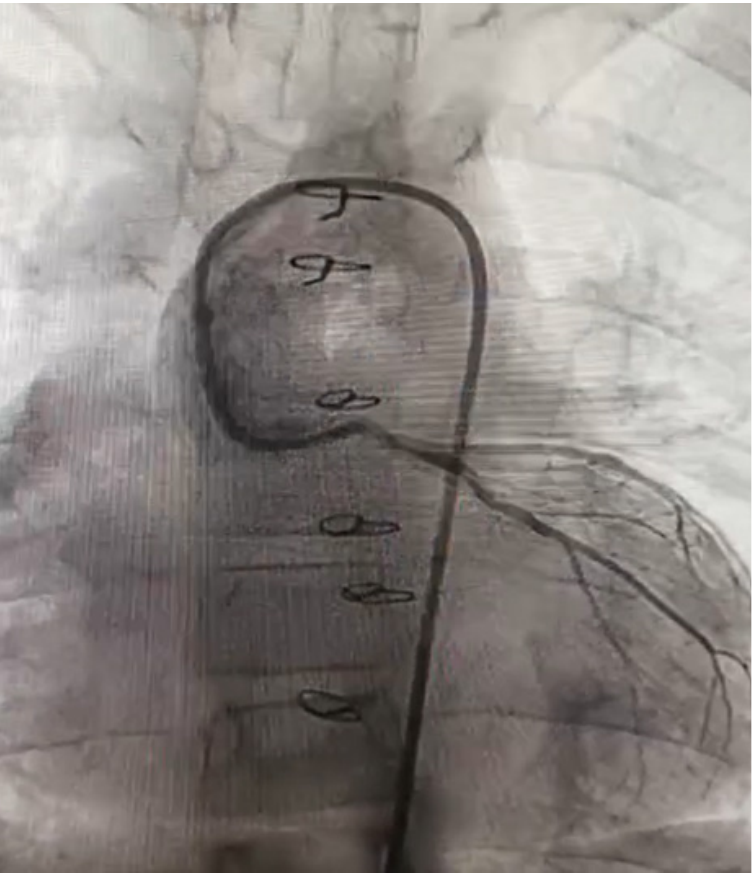
The initial aortogram showed no evidence of residual shunts or a patent ductus arteriosus (Figure 1). During the procedure, the left coronary artery territory had a smaller diameter compared to the right coronary artery territory; therefore, selective coronary angiography was performed for detailed anatomical characterization.
Selective contrast injection using a Tiger catheter demonstrated adequate reimplantation of the left main coronary artery into the aorta, associated with narrowing of the proximal segment and diffuse reduction in vessel diameter (Figure 2A-B), with good distal opacification. There were no hemodynamic abnormalities during the procedure.
Fig. 2
Selective angiogram of the left main coronary artery. A) Reimplantation of the left main coronary artery into the aorta. B) Narrowing of the proximal segment and diffuse reduction in vessel diameter, with good distal opacification.
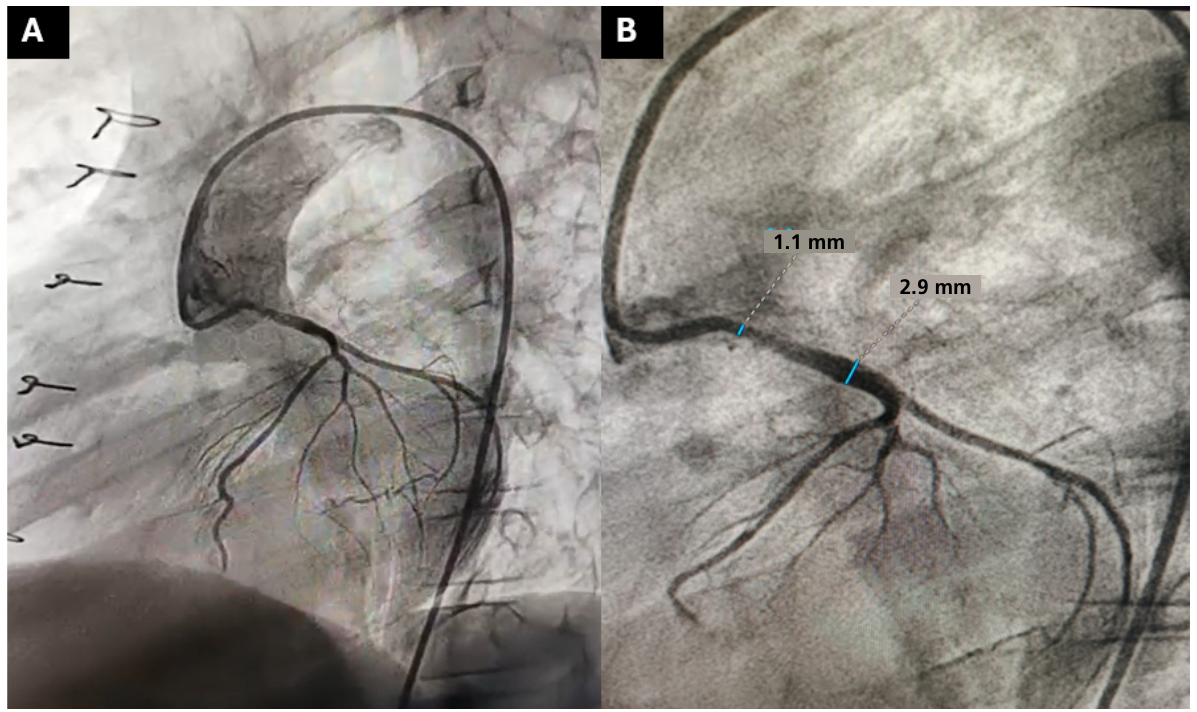
The angiographic findings were consistent with residual coronary changes following surgical correction of ALCAPA. In this context, assessment of coronary artery anatomy remains an important component of long-term follow-up, even in patients without clinical manifestations. (1,2)
This case highlights the utility of cardiac catheterization for characterizing the anatomy of coronary arteries in pediatric patients with corrected congenital heart diseases and identifying relevant angiographic findings during follow-up. (3)
Ethical considerations
The authors obtained informed consent from the patient.