Alejandra Avalos Oddi1 , Yanina Castillo Costa2 MTSAC , Heraldo D’Imperio2 MTSAC , Omar Prieto1 MTSAC , Jessica Gantesti1 MTSAC , Cecilia López1 , Leonardo Cáceres2, Flavio Delfino2 MTSAC
1 Council of Psychosocial Aspects, Argentine Society of Cardiology, Buenos Aires, Argentina.
2 Research Area, Argentine Society of Cardiology and Argentine Federation of Cardiology
Address for reprints: Alejandra Ávalos Oddi. E-mail: investigación@sac.org.ar
Rev Argent Cardiol 2023;91:395-402. http://dx.doi.org/10.7775/rac.v91.i6.20709
This work received the Dr. Raúl Borracci Award - Special Mention Accésit at the 49th Argentine Congress of Cardiology.
ABSTRACT
Background: Healthcare professionals are exposed to an occupational phenomenon as a result of chronic stress in the workplace called burnout syndrome (BOS). Burnout has become one of the most important psychosocial occupational hazards today and generates significant health care costs.
Objectives: The aim of our study was to evaluate the subjective perception of the prevalence of BOS among cardiologists of the Argentine Society of Cardiology (SAC) using Maslach Burnout Inventory (MBI), and the differences between sexes.
Methods: We conducted an observational, cross-sectional study using an anonymous survey distributed among specialists of the SAC register in April 2023. The information collected included the subjective impression of BOS (feeling "burned out"), sex, age and years of practice. The participants could optionally complete the MBI (subscales) to establish the diagnosis of BOS.
Results: A total of 756 professionals participated in the survey; 51.4% were women. Sixty-two percent of the participants were >40 years old, and 61 % had been practicing medicine for more than 10 years. Of all the physicians surveyed, 94.4% completed the MBI, with women more likely to do so than men (96.6% vs. 91.3%, p < 0.001). The prevalence of BOS, assessed by a high MBI score (≥ 67), was 75%, while 69% reported feeling burned out (p < 0.001). Of those who felt burned out (69 %), 96.8 % completed the MBI, and 78% of them received a diagnosis of BOS based on high MBI scores. Of the 31 % who did not feel burned out, 89.3 % completed the MBI. Burnout syndrome was diagnosed in the emotional exhaustion subscale in 24 %, in the depersonalization subscale in 18%, and in the personal accomplishment subscale in 10%. The diagnosis of BOS made by high MBI score was more common in survey participants under 40 years than in older participants (50 % vs. 28 %, p < 0.001) and in professionals who have been practicing medicine for less than 10 years (45 % vs. 20 % in those with more years of practice, p < 0.001). Women were more likely to experience BOS according to their own perception (77 % vs. 56 %, p < 0.001) and MBI score (80 % vs. 74 %, p < 0.001), specifically in the emotional exhaustion (37 % vs. 29 %, p < 0.001) and personal accomplishment (37 % vs. 41 %, p < 0.001) subscales, with No differences by sex in the depersonalization sphere.
Conclusion: Burnout syndrome was found to be prevalent among the surveyed cardiologists, particularly in female participants, as indicated by both their own perception and the MBI assessment. In addition, 1 out of 4 professionals surveyed who did not feel "burned out" tested positive for BOS. Given the high prevalence of BOS among cardiologists, coordinated and sustained prevention and intervention actions should be undertaken to change this reality that negatively impacts both patient and physician health.
Key words: Cardiologists - Burnout - Exhaustion - Risk - Prevention
RESUMEN
Introducción: Los profesionales de la salud se encuentran expuestos a un fenómeno ocupacional que resulta del estrés crónico en el ámbito laboral llamado síndrome de burnout (SBO). Este se ha convertido en uno de los riesgos laborales psicosociales más importantes en la sociedad actual y genera costos significativos en el ámbito de la salud.
Objetivos: Evaluar la prevalencia de SBO por percepción subjetiva y mediante la aplicación del inventario del síndrome del Desgaste Ocupacional “Burnout” de Maslach (MBI) en los especialistas de cardiología del padrón de la Sociedad Argentina de Cardiología (SAC), y las diferencias acordes al sexo.
Material y métodos: Estudio observacional, de corte transversal, mediante una encuesta anónima realizada en abril de 2023 a los especialistas del padrón SAC. Se recabaron datos sobre impresión subjetiva de SBO (sentirse “quemado”), sexo, edad, tiempo de ejercicio profesional. Fue opcional completar el inventario MBI (subescalas) para establecer el diagnóstico de burnout.
Resultados: Participaron 756 profesionales, 51,4 % fueron mujeres. El 62 % tenían más de 40 años y el 61 % tenía más de 10 años de ejercicio profesional. Del total de médicos encuestados, el 94,4 % eligió realizar el test de Maslach (MBI), siendo esto más frecuente en las mujeres (96,6 % vs 91,3 %, p < 0,001). La prevalencia de SBO por un MBI de alto puntaje (≥67puntos) fue del 75 % y la prevalencia de percepción de SBO fue del 69 % (p < 0,001). De los que se autopercibieron “quemados” (69 %), el 96,8 % contestó el inventario MBI y se confirmó el diagnóstico de SBO por MBI de alto puntaje en el 78 %. De los que se autopercibieron “no quemados” (31 %), el 89,3 % completó el inventario MBI con diagnóstico de SBO en la subescala cansancio emocional (24 %), despersonalización (18 %) y realización personal (10 %) más allá de no tener la impresión subjetiva de estar “quemado”. Los menores de 40 años tuvieron más SBO por MBI de alto puntaje (50 % vs 28 %, p= 0,001) al igual que los profesionales con menos de 10 años en el ejercicio de su profesión (45 % vs 20 % en aquellos con tiempo mayor, p < 0,001). El SBO fue más prevalente en las mujeres que en los hombres, tanto por autopercepción (77 % vs 56 %, p < 0,001) como por el inventario de Maslach (80 % vs 74 %, p=0,001), específicamente en la subescala agotamiento emocional (37 % vs 29 %; p < 0,001) y realización personal (37 % vs 41 %, p < 0,001), sin diferencias por sexo en la esfera de despersonalización.
Conclusión: El SBO tiene alta prevalencia entre los cardiólogos encuestados, principalmente en mujeres, tanto por autopercepción como por aplicación del inventario MBI. Por otro lado 1 de cada 4 profesionales encuestados que no se autopercibían “quemados” tuvieron un test positivo para SBO. Teniendo en cuenta la alta prevalencia de SBO entre los especialistas en cardiología es imperioso realizar acciones de prevención e intervención concertadas y sostenidas para transformar esta realidad que impacta desfavorablemente tanto en la salud de los pacientes como en la de los propios médicos.
Palabras clave: Cardiólogos - Burnout - Agotamiento - Riesgo - Prevención
Received: 11/03/2023
Accepted: 11/25/2023
INTRODUCTION
A mounting body of evidence indicates that healthcare professionals are exposed to an occupational phenomenon as a result of chronic stress in the workplace. (1,2)
Burnout has become one of the most important psychosocial occupational hazards today and generates significant health care costs. (3-4)
Burnout syndrome (BOS) is an individual response to chronic work stress that develops progressively and can eventually become chronic, resulting in detrimental health effects. (5)
From a psychological point of view, this syndrome causes damage at cognitive, emotional, and attitudinal levels, which affects the performance of the individual and their environment. (6)
However, it is not a personal problem, but a consequence of certain characteristics of the work activity (7)
The term was introduced in the psychological sphere by Freudenberger, (7)
who described burnout as a state of exhaustion, fatigue and frustration due to a professional activity that fails to produce the expected expectations. Later, Maslach (8)
introduced the concept of burnout in the scientific literature and defined it as a gradual process of fatigue, cynicism and reduced commitment among social care professionals. Years later, after conducting numerous empirical studies, Maslach and Jackson (9)
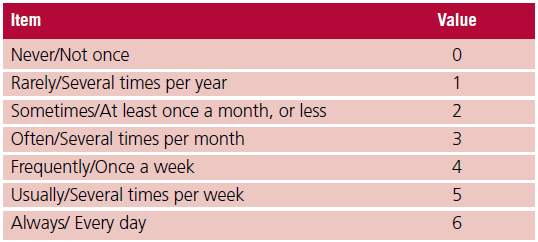
revised the concept of burnout to generate a more rigorous and operational definition, and defined burnout as a psychological syndrome that can occur in caregivers and is characterized by emotional exhaustion, depersonalization, and a reduced sense of professional efficacy. Empirical studies indicate that exhaustion and depersonalization constitute the core or key dimensions of BOS at work, while lack of professional accomplishment is considered an antecedent of burnout, or even a consequence. Maslach's and Jackson's description of exhaustion is widely accepted in scientific literature and the Maslach Burnout Inventory (MBI) is the most objective and validated tool to diagnose BOS. Although there are no cut-off scores to determine the presence or absence of clinical burnout, it is defined by high levels of emotional exhaustion and depersonalization and low levels of personal accomplishment. The MBI scores for the diagnosis of burnout are classified in low (1-33), medium (34-66), and high (67-99). (10,11)
Burnout syndrome greatly affects both the personal and work lives of workers, as well as the economy and public health of nations. For this reason, the World Health Organization (WHO) has added burnout in the 11th Revision of the International Classification of Diseases (ICD-11) as an occupational phenomenon (12)
and urged countries to conduct regular surveys to establish its prevalence among physicians, (13)
which ranges from 35% to 60% across various medical specialties.
In the last Medscape Cardiologist Lifestyle, Happiness & Burnout Report 2023, 29% of cardiologists in the United States said they felt burned out and 14% were burned out and depressed. (14)
Due to the significance of this subject and the absence of local data among cardiologists, we decided to conduct the current investigation. The aim of our study was to evaluate the subjective perception of the prevalence of BOS among the Argentine Society of Cardiology (SAC) cardiologists, using Maslach Burnout Inventory (MBI), and the differences between sexes.
METHODS
We conducted an observational, cross-sectional study using an anonymous survey with closed questions developed in REDCap. The participation was voluntary. The information collected included the subjective impression of BOS (feeling "burned out"), sex, age, years of practice, and risk factors (hypertension, family history, diabetes, dyslipidemia, and cardiovascular disease). The participants could optionally complete the MBI to establish a diagnosis of BOS through the assessment of the subscales (emotional exhaustion, depersonalization and personal achievement).
The survey was distributed via email, WhatsApp and different social networks (Instagram and Facebook, among others) to cardiologists included in the register of SAC members. The access to the survey was through an online link, which was opened during April 2023. The distribution message on social networks stated that the survey was limited to cardiologists exclusively. The survey is published in the Appendix.
Statistical analysis
Qualitative variables are expressed as percentages and were compared using the chi-square test or Fisher's test, as appropriate. Quantitative variables are expressed as median and interquartile range (IQR) and were compared using the Mann Whitney test.
The diagnosis of BOS was made using a score ≥ 67 points in the MBI. The percentage of males and females who responded the survey was analyzed, as well as the proportion categorized by sex with their subjective impression of BOS and burnout in the different subscales. The total score obtained in the MBI was analyzed, along with the score of each of its components (subscales) by sex, age, years of practice and subjective perception.
Multivariate analysis was performed to determine whether stress, measured objectively by the MBI, is a predictor of cardiovascular disease after controlling for classic confounders (hypertension, diabetes, dyslipidemia, etc.).
A two-tailed p value < 0.05 was considered statistically significant.
Ethical considerations
The protocol was evaluated and approved by the Committee on Ethics of the Argentine Society of Cardiology through the PRIISA.BA platform of the Ministry of Health of the City of Buenos Aires. Since this survey was anonymous and self-administered, participants were not required to give informed consent. The survey was conducted following national and international ethical standards for research on human subjects, as the Declaration of Helsinki revised in 2013, National Ministry of Health resolution 1480/2011, law N° 3301 of the city of Buenos Aires, and ANMAT regulation 6677/10 and amendments 4008 and 4009. Data privacy among respondents was protected through anonymity in the electronic survey.
RESULTS
A total of 756 professionals participated in the survey; 51.4% were women. Sixty-two percent of the participants were > 40 years old, and 61% had been in the profession for more than 10 years.
Of all the physicians surveyed, 94.4% completed the MBI, with women more likely to do so than men (96.6% vs. 91.3%, p < 0.001).
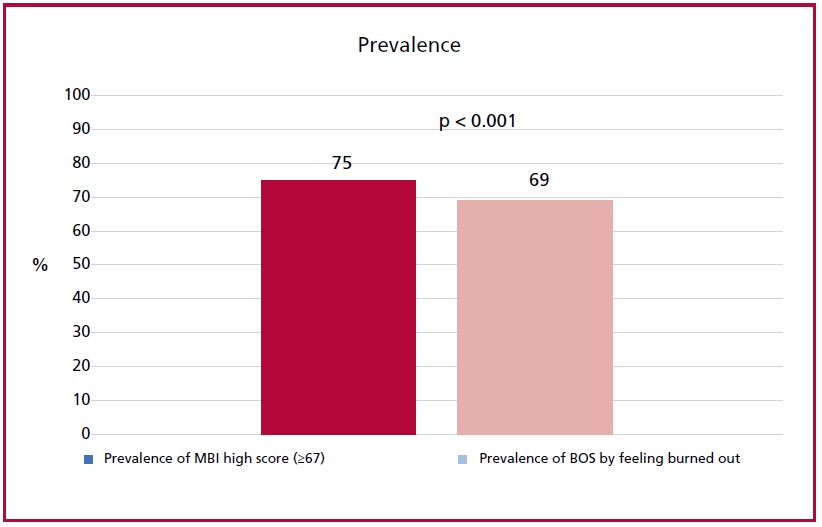
The rate of BOS, assessed by a high MBI score (≥ 67), was 75%, while 69% reported feeling burned out (p < 0.001). (Figure 1)
Of those who felt burned out (69%), 96.8% completed the MBI, and 78% of them received a diagnosis of BOS based on high scores. Of the 31% who did not feel burned out, 89.3% completed the MBI. Burnout syndrome was diagnosed in the emotional exhaustion subscale in 24%, in the depersonalization subscale in 18%, and in the personal accomplishment subscale in 10%. (Table 1).
Those who felt burned out completed the MBI more often than those who did not feel burned out (96.8% vs. 89.3%, p < 0.001).
The diagnosis of BOS made by high MBI score was more common in survey participants under 40 years than in older participants. Similarly, professionals who have been practicing medicine for less than 10 years had a higher prevalence of BOS compared to those with more years of practice (Table 1).
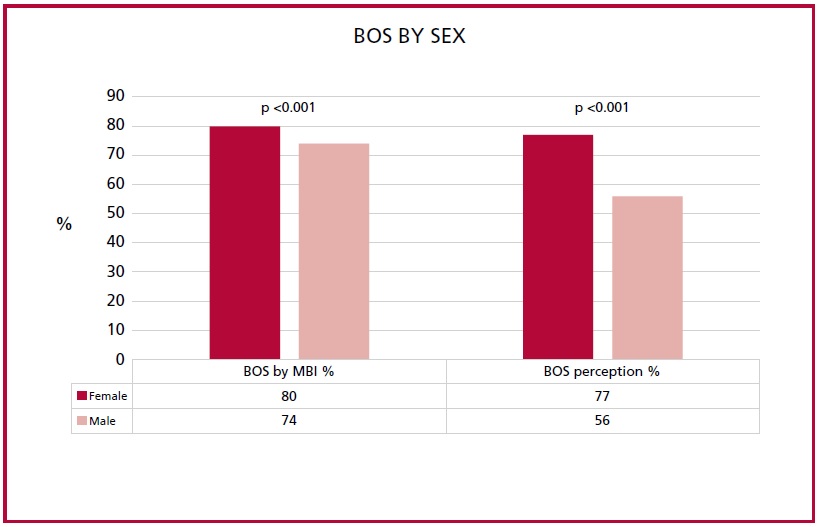
Women were more likely to experience BOS according to their own perception (77% vs. 56%, p < 0.001) and MBI score (80% vs. 74%, p < 0.001) (Figure 2). This was particularly true in the emotional exhaustion (37% vs. 29%, p < 0.001) and personal accomplishment (37% vs. 41%, p < 0.001) subscales. No differences by sex were found in the depersonalization sphere. (Figure 3)
As for traditional risk factors for cardiovascular disease, hypertension was reported by 17% of respondents, more frequently in men (25.7% vs. 9%, p < 0.001). There were no differences in the prevalence of diabetes (5.2%) between men and women. Dyslipidemia was more common in men (31% vs. 17%, p < 0.001), but the history of cardiovascular disease was similar in men and women (14%). We could not determine how BOS affects cardio-metabolic health by analyzing survey data, as most of the data did not show any significant results.
Fig. 1. Prevalence of BOS. MBI:
MBI: Maslach Burnout Inventory; IQR: interquartile range
Table 1. Not burned out vs. burned out by high score (≥ 67)
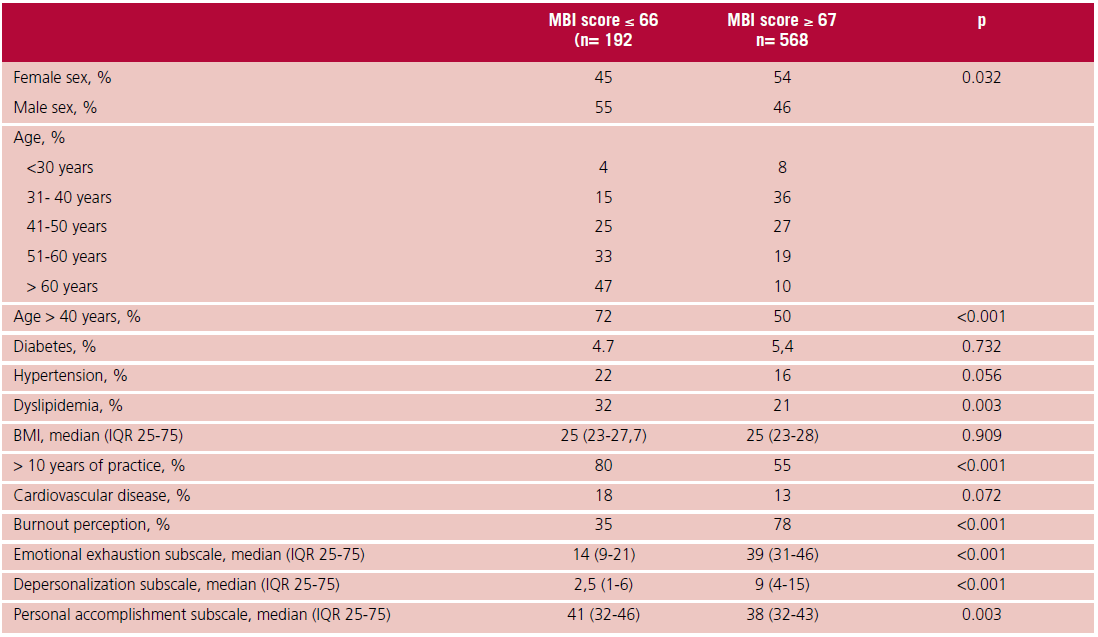
Fig. 2.
MBI: Maslach Burnout Inventory; BOS: burnout syndrome
Fig. 3.
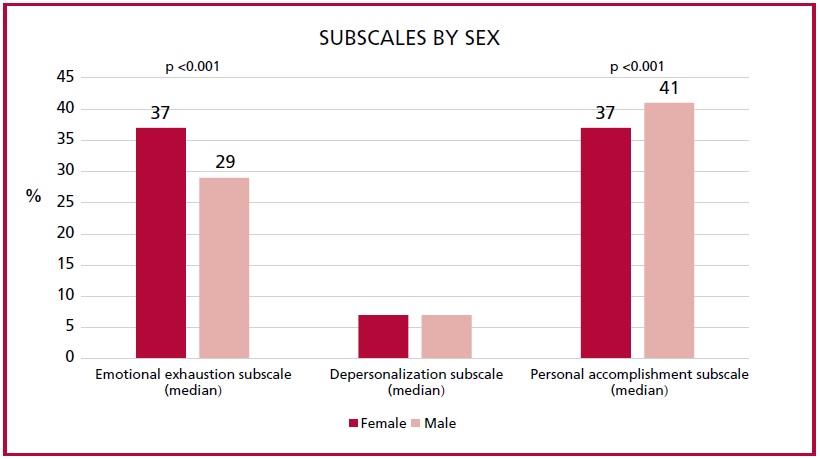
IQR: Interquartile range
DISCUSSION
The impact of physician burnout on the quality and efficiency of patient care is becoming increasingly recognized. In fact, the American Heart Association states that physician well-being is crucial for ensuring quality patient care and academic activities. (15,16)
A hostile work environment, no control over workload, and insufficient documentation time are independently associated with higher rates of burnout among cardiologists. (17)
The consequences of burnout are not insignificant and include lower-quality patient care, higher rates of medical error, decreased productivity, and decreased patient satisfaction. The consequences of physician exhaustion include broken personal relationships, substance use, depression, and even suicide. (18,20)
In the Medscape Cardiologist Lifestyle, Happiness, and Burnout Report 2022, (21)
47% of U.S. cardiologists were burned out, particularly among female cardiologists (55% vs. 40%). On the other hand, the Medscape Report 2023 (BOS 29%) showed no sex differences in job burnout. (14)
Bureaucratic tasks were cited as the primary cause of burnout among cardiologists in both 2022 and 2023. Physicians overall mostly chose positive coping mechanisms such as exercise, meeting with family and/or friends, and getting more sleep. (14-21)
In the paper "Burnout and Career Satisfaction Among U.S. Cardiologists" by the American College of Cardiologists, more than one-quarter of respondents (26.8%) reported being "burned out". (13)
Our data indicates a greater rate of BOS, both subjectively (69%) and as determined by MBI (75%), and like in other countries, it is more prevalent among women. Female doctors face a multitude of responsibilities and tasks assigned by men (multitasking), apart from their work overload. This situation can worsen self-awareness and self-regulation, adversely affecting cognitive, emotional, social, and physiological health predictors. (22-24)
It is unclear why burnout is more prevalent in this study compared to the cited reports, although the likely drivers of burnout include low pay, unrealistic efficiency/productivity targets, limited time for each patient visit, high administrative burden, the need for moonlighting, job insecurity, loss of autonomy associated with intense work, financial stress, and increasing negative opinions towards physicians. (25,26)
In terms of the perception of workplace well-being, a recent survey conducted on labor equity, gender violence, and cardiovascular risk factors among Argentine cardiologists included in the register of the Argentine Society of Cardiology (27)
revealed that 66% of specialists believed their workload was excessive, with no significant differences between genders. Furthermore, over half (66%) reported that their remuneration was not commensurate with their professional and academic training, particularly among female specialists.
According to our report, participants under the age of 40 and those with less than 10 years of practice had a higher prevalence of burnout syndrome diagnosed by a high MBI score. This data aligns with preliminary figures from a recent survey on 250 cardiology residents, in which 8 out of 10 (83%) considered the possibility of emigrating to practice their profession in another country. Insecurity, poor working conditions, low wages and a high workload are some of the underlying reasons. (28)
Occupational burnout among physicians is primarily attributable to problems in the practice environment rather than to new regulations or professional roles. Aspects of the practice environment contribute to the distress experienced by individual physicians. These dimensions have been well characterized and include stereotypes: physicians should be insensitive to normal human limitations (i.e., superhuman), work should always come first, and seeking help is a sign of weakness. These mindsets lead many physicians to engage in unhealthy levels of self-sacrifice manifested by excessive work hours, anxiety about missing something that would benefit their patients, and prioritizing work over personal health. (26)
Several studies conducted in different fields have revealed another disorder called the "impostor phenomenon", which describes a psychological experience of intellectual and professional fraudulence in both men and women. This phenomenon can be structured in the individual as a real syndrome associated with both personal (e.g., low emotional well-being, problems with work-life integration, anxiety, depression, suicide) and professional (e.g., impaired job performance, occupational burnout) consequences. (29,30)
Medical students seem to be more exposed, with 1 in 4 students experiencing the impostor phenomenon, and those who experience it are at higher risk for professional burnout. (31)
Burnout appears to be a risk factor for psychiatric problems, such as depression, anxiety disorders, substance use, post-traumatic stress disorder, and neurocognitive problems, as well as family and relationship problems. (32)
The scientific literature suggests that implementing individual-centered and structural/organizational strategies can result in clinically significant decreases in physician burnout. (33,34)
CONCLUSIÓN
BOS was found to be prevalent among the surveyed cardiologists, particularly in female participants, as indicated by both self-perception and the MBI assessment. In addition, 1 out of 4 professionals surveyed who did not feel "burned out" tested positive for BOS. Interestingly, compared with other studies, burnout rates were higher among cardiologists. Our data necessitate improving our efforts to determine the causes of burnout and design solutions at the individual and organizational levels. Defining the outlines of burnout provides us with a common language and a space to discuss this emerging scourge in the field of medicine today. We can utilize this comprehension of burnout to further develop interventions, explore them, and effectively tackle them to promote better health for everyone.
https://creativecommons.org/licenses/by-nc-sa/4.0/

Conflicts of interest
None declared. (See authors' conflict of interests forms on the web).
Financing
None.
©Revista Argentina de Cardiología
REFERENCES
- Matsuo T, Kobayashi D, Taki F, Sakamoto F, Uehara Y, Mori N, et al. Prevalence of Health Care Worker Burnout During the Coronavirus Disease 2019 (COVID-19) Pandemic in Japan. JAMA Netw Open. 2020;3:e2017271. https://doi.org/10.1001/jamanetworkopen.2020.17271
- Wu Y, Wang J, Luo C, Hu S, Lin X, Anderson AE, et al. A Comparison of Burnout Frequency Among Oncology Physicians and Nurses Working on the Frontline and Usual Wards During the COVID-19 Epidemic in Wuhan, China. J Pain Symptom Manage. 2020;60:60-5. https://doi.org/10.1016/j.jpainsymman.2020.04.008
- Han S, Shanafelt TD, Sinsky CA, Awad KM, Dyrbye LN, Fiscus LC, et al. Estimating the Attributable Cost of Physician Burnout in the United States. Ann Intern Med. 2019;170:784-90. https://doi.org/10.7326/M18-1422
- Montero-Marín, J. El síndrome de burnout y sus diferentes manifestaciones clínicas: Una propuesta para la intervención. Aneste. Analg. Reanim. 2016;29:1-16.
- Maslach, C. Comprender el agotamiento laboral. En Estrés y Calidad de la Vida Laboral: Perspectivas Actuales en Salud Ocupacional; Rossi, A.M., Perrewé, P.L., Sauter, S.L., Eds.; Information Age Publishing: Charlotte, NC, USA, 2006; págs. 37–52
- Bouza E, Gil-Monte PR, Palomo E; en representación del Grupo de trabajo para deliberar sobre el síndrome de quemarse por el trabajo burnout en los médicos de España; Componentes del Grupo de trabajo para deliberar sobre el síndrome de quemarse por el trabajo burnout en los médicos de España. Work-related burnout syndrome in physicians in Spain. Rev Clin Esp (Barc). 2020;220:359-63. English, Spanish. https://doi.org/10.1016/j.rce.2020.02.002
- Freudenberger, H. Staff Burnout. Journal of Social Issues, 1974;30:159-65. http://dx.doi.org/10.1111/j.1540-4560.1974.tb00706.x.
- Maslach, C. Burn-Out. Human Behavior, 1976;5:16-22.
- Maslach C, Jackson SE. Maslach Burnout Inventory. Manual; Consulting Psychologists Press: Palo Alto, CA, USA, 1981.
- Schaufeli, W. B., & Bunk, B. P. (2003). Burnout: An Overview of 25 Years of Research and Theorizing. In M. J. Schabracq, J. A. M. Winnubst, & C. L. Cooper (Eds.), The Handbook of Work and Health Psychology 2003:382-425. Chichester: John Wiley & Sons. https://doi.org/10.1002/0470013400.ch19
- Edú-Valsania S, Laguía A, Moriano JA. Burnout: A Review of Theory and Measurement. Int J Environ Res Public Health. 2022;19:1780. https://doi.org/10.3390/ijerph19031780
- OMS. La organización del trabajo y el estrés. https://www.who.int/occupational_health/publications/pwh3sp.pdf?ua=1: Organización Mundial de la Salud.
- Mehta LS, Lewis SJ, Duvernoy CS, Rzeszut AK, Walsh MN, Harrington RA, et al; American College of Cardiology Women in Cardiology Leadership Council. Burnout and Career Satisfaction Among U.S. Cardiologists. J Am Coll Cardiol. 2019;73:3345-8. https://doi.org/10.1016/j.jacc.2019.04.031
- Koval ML. Medscape Cardiologist Lifestyle, Happiness & Burnout Report 2023. Disponible en : https://www.medscape.com/slideshow/2023-lifestyle-cardiologist-6016071?ecd=WNL_physrep_230708_lifestyle2023_rm2_etid5605371&uac=213339ET&impID=5605371#7
- Benjamin IJ, Valentine CM, Oetgen WJ, Sheehan KA, Brindis RG, Roach WH Jr, et al. 2020 American Heart Association and American College of Cardiology Consensus Conference on Professionalism and Ethics: a consensus conference report. Circulation. 2021;143:1035–87. https://doi.org/10.1161/CIR.0000000000000963
- Mehta LS, Elkind MSV, Achenbach S, Pinto FJ, Poppas A. Clinician well-being: addressing global needs for improvements in the health care field: a joint opinion from the American College of Cardiology, American Heart Association, European Society of Cardiology, and the World Heart Federation. Circulation. 2021;144:151–5. https://doi.org/10.1161/CIRCULATIONAHA.121.055748.
- Mehta LS, Lewis SJ, Duvernoy CS, Rzeszut AK, Walsh MN, Harrington RA, Poppas A, Linzer M, Binkley PF, Douglas PS; American College of Cardiology Women in Cardiology Leadership Council. Burnout and career satisfaction among U.S. cardiologists. J Am Coll Cardiol. 2019;73:3345–8. https://doi.org/10.1016/j.jacc.2019.04.031
- Oreskovich MR. Alcohol use does not equal abuse-reply. Arch Surg. 2012;147:786. https://doi.org/10.1001/archsurg.2012.1275
- Shanafelt TD, Balch CM, Dyrbye L, Bechamps G, Russell T, Satele D, et al. Special report: suicidal ideation among American surgeons. Arch Surg. 2011;146:54-62. https://doi.org/10.1001/archsurg.2010.292
- Dyrbye LN, Thomas MR, Massie FS, Power DV, Eacker A, Harper W, et al. Burnout and suicidal ideation among U.S. medical students. Ann Intern Med. 2008;149:334-41. https://doi.org/10.7326/0003-4819-149-5-200809020-00008
- Baggett SM, Martin KL. Medscape Cardiologist Lifestyle, Happiness & Burnout Report 2022. Disponible en: https://www.medscape.com/slideshow/2022-lifestyle-cardiologist-6014764#4
- Mehta LS, Lewis SJ, Duvernoy CS, Rzeszut AK, Walsh MN, Harrington RA, Poppas A, Linzer M, Binkley PF, Douglas PS; American College of Cardiology Women in Cardiology Leadership Council. Agotamiento y satisfacción profesional entre los cardiólogos estadounidenses. J Am Coll Cardiol. 2019;73:3345-48. https://doi.org/10.1016/j.jacc.2019.04.031.
- Cómo nos afecta el multitasking: 3 efectos de la multitarea [Internet]. National Geographic. 2022 [cited 2023 Aug 18]. Available from: https://www.nationalgeographicla.com/ciencia/2022/11/comonos-afecta-el-multitasking-3-efectos-de-la-multitarea
- Daniel López Rosetti. Ellas. Grupo Planeta Spain; 2016.
- Shanafelt TD, Noseworthy JH. Executive Leadership and Physician Well-being: Nine Organizational Strategies to Promote Engagement and Reduce Burnout. Mayo Clin Proc. 2017;92:129-46. https://doi.org/10.1016/j.mayocp.2016.10.004
- West CP, Dyrbye LN, Shanafelt TD. Physician burnout: contributors, consequences and solutions. J Intern Med. 2018;283:516-29. https://doi.org/10.1111/joim.12752
- Crosa VL, Avalos Oddi A, Verdugo S, Castillo Costa Y, Cáceres L, Rubilar B. Labor Equity, Gender Violence and Cardiovascular Risk Factors in Cardiology Specialists. Rev Argent Cardiol 2022;90:323-8. http://dx.doi.org/10.7775/rac.v90.i5.20562
- https://www.infobae.com/salud/2023/07/17/residencias-en-cardiologia-el-83-de-los-profesionales-penso-en-la-posibilidad-de-emigrarpara-ejercer-segun-una-encuesta/
- Shanafelt TD, Dyrbye LN, Sinsky C, Trockel M, Makowski MS, Tutty M, et al. Imposter Phenomenon in US Physicians Relative to the US Working Population. Mayo Clin Proc. 2022;97:1981-93. https://doi.org/10.1016/j.mayocp.2022.06.021
- Bravata DM, Watts SA, Keefer AL, Madhusudhan DK, Taylor KT, Clark DM, et al. Prevalence, Predictors, and Treatment of Impostor Syndrome: a Systematic Review. J Gen Intern Med. 2020;35:1252-75. https://doi.org/10.1007/s11606-019-05364-1
- Brennan-Wydra E, Chung HW, Angoff N, ChenFeng J, Phillips A, Schreiber J, et al. Maladaptive Perfectionism, Impostor Phenomenon, and Suicidal Ideation Among Medical Students. Acad Psychiatry. 2021;45:708-15. https://doi.org/10.1007/s40596-021-01503-1
- Summers RF. The Elephant in the Room: What Burnout Is and What It Is Not. Am J Psychiatry. 2020;177:898-9. https://doi.org/10.1176/appi.ajp.2020.19090902
- West CP, Dyrbye LN, Erwin PJ, Shanafelt TD. Interventions to prevent and reduce physician burnout: a systematic review and meta-analysis. Lancet. 2016;388:2272-81. https://doi.org/10.1016/S0140-6736(16)31279-X
- Kelly RJ, Hearld LR. Burnout and Leadership Style in Behavioral Health Care: a Literature Review. J Behav Health Serv Res. 2020;47:581-600. https://doi.org/10.1007/s11414-019-09679-z